In Van der Leeuw's last chapter, Theology of the Arts, he discusses his philosophy on art being considered within dance, drama, word, image, and building. All of these things revolve around God. The birth of art begins in the center with the Image of God the Son when He represents himself. Van der Leeuw suggests that art doesn't begin with creation, but with redemption. Van der Leeuw further goes on to discuss in detail what each component of art means and the contributions it has brought to art. However, when he gets to music, he states that "[music] represents eschatology in the theology of arts." Eschatology is defined as "any system of doctrines concerning last, or final matter, as death, the Judgment, the future state, etc." In his diagram, Van der Leeuw writes music in as demolishing, however, it's part of God the Holy Spirit. In my opinion, these are contradictory, unless I don't understand Christianity fully. I also don't understand how music can be seen as demolishing, when dance is part of art. More times than none, dancing involves music, therefore they'd both be considered art in my eyes.
Later in his discussion, Van der Leeuw points out that every true work of art is in a sense religious. I'm not sure how it was back in older times, but I believe now people who go to church sing hymnals in order to praise God. That can both be a combination of word, which is art, and music which is not art.
Wednesday, September 30, 2009

Sunday, September 27, 2009
PCUSA headquarters - Lindsay Conrad
 I visited the PCUSA headquarters on a seminary visit this weekend, and I had the opportunity to get a really great tour of the place because my old pastor works there way up. He took me through the building and explained how it was two old warehouses and they combined then and created this huge facility for the church. The most interesting thing that we cane across was the chapel. A bunch of Koreans had visited and were upset that there was no chapel in the headquarters so they raised hundreds of thousands of dollars and build this exquisite chapel in the middle of the headquarters. The photo to my right is the inside of the chapel doors. Each aspect of the chapel was thought out with much care, and this is a dismissal. One is to exit with the Word (middle) and with the love and grace and peace of the Holy Spirit (dove above) and enter into the world with open arms. This as well as the front of the door is a good example of the Image and Building as van der Leew talks about.
This image is the front of the doors to the chapel and is supposed to display the welcoming of all people into this place of worship. The attention to details makes the door stand out and be a beautiful addition of artwork and worship in the PCUSA. Upon entering the doors, one will see a series of straight and curved lines that are to indicate the structure and flexibility of the church. There is a large window and by the window is a garden said to contain a palnt from every continent to show the universal nature of the church, and there is artwork in the chapel in three tiers to represent the Father, Son, and Holy Ghost. Each and every details of the chapel is specifically designed for teh glory and honor of the one true God, and the concentration put on every detail makes the chapel ane xquisite addition to the building that is a perfect blend of things old and new.
Saturday, September 26, 2009
Dance of Animals and Humans - Kevin Gontkovic
Dance is a form of expression for many people, as is all areas of art. Some indigenous tribes use dance as a way to communicate with the gods. Animals also dance, but theirs is quite different from ours, according to Van der Leeuw. Van der Leeuw says that the dance of animals is more instinctive than ours. He specifically says this on page fifteen, “The dance of the animals is an instinctive, almost automatic, movement, and is therefore not a dance at all.” I would have to agree with his statement there. Animals only dance because they have to in order to survive, like the bees in the video that we watched in class. We dance because we choose to do so. We do not have to dance in order to survive. I think there are exceptions to this, like when the dance is related to religion. Depending on the situation, the dance could be necessary to survival in a religious sense. Even though it might be necessary, we could still decide to not do it. This is because we are able to think for ourselves, whereas animals cannot.
Our physical bodies do not need the dance in order to sustain our bodily functions. It is good exercise though and can improve our bodily functions but it is not necessary for survival. We also do not need to dance in order to communicate with other humans. This is different with some animals though because dancing is one of the only ways of communication for animals. This is especially true for bees, as we saw in class, because they communicate which direction and the distance to the places where food is. These scouts only know how to communicate using dance. They do not freely choose to dance. They must dance or else they and their fellow bees will not be able to find food efficiently. Even if the scout bee had a choice, it could only choose to dance because of how necessary it is for the bees’ survival.
This freedom to choose is what makes the dance of humans so much more special than the dance of animals. The dance of humans is a magnificent sight to behold because there are so many factors that go into it. Because we have the capacity for emotions and desires, we can use dance as a way to express those emotions and desires. Seeing another human express their most inner thoughts and emotions in a dance, whether it be for religious purposes or not, is a very exquisite form of art.
Thursday, September 24, 2009
Kristine Penningroth: Nature's Dance v. Human Dance
After watching the video clip with the dance of the Bees, I started to think about the difference between the dance of Nature and the dace of Humans and whether there really is a difference or not. I have come to a conclusion that there is a difference and that difference has a greater impact on the animal or insect life than it does on the human life.
In nature, everything that is living has a purpose and must follow a protocol to survive. The dance of the bees is the way that the insect survives and continues to procreate. Without their form of dance, there would be no way for them to fine food, no way for them to mate, and no way for them to continue to be what they are and to do what they were put here to do. The animal kingdom has it's own way of continuing and it depends on its ancient traditions and the learned traits from the older generation. It is second nature to each species to do what they need to do to survive and make sure that they can provide for themselves and for the rest of the group.
The art of dance in the human life is very differnt. We do not necessarily do it for survival, but more for joy and entertainment. One can go the step farther and say that professional dancers do need it to survive since they are earning money to go on, but all in all dance is a form of expression and not a form of survival. Dance is fun and very simple. The only thing that is needed is a body and some sort of beat. The beat doesn't even need to be loud, it can be something in your head, as lng as you can move to it. Dance lets us express ideas and lets us relax as well as have fun. It is not there to create a survival process. We as humans have different ways of survival and becasue of that, we take dance a lot less seriously than nature does.
Both of these forms of dance do represent a way of life and a form of survival. Each is beneficial in its own way and serves a different purpose. There is a similarity between the two though and that would be the fertility dance that many tribes did. This is the same as the food gathering dance that the bees do. It's a form of survival or a dance that will ensure survival of the tribe. Both have the same idea and the same ambition, though are brought form in differnt ways. Both Nature and Humans have a dance that they pass down but both dances are differnt and have a differnt meaning when taken into consideration.
In nature, everything that is living has a purpose and must follow a protocol to survive. The dance of the bees is the way that the insect survives and continues to procreate. Without their form of dance, there would be no way for them to fine food, no way for them to mate, and no way for them to continue to be what they are and to do what they were put here to do. The animal kingdom has it's own way of continuing and it depends on its ancient traditions and the learned traits from the older generation. It is second nature to each species to do what they need to do to survive and make sure that they can provide for themselves and for the rest of the group.
The art of dance in the human life is very differnt. We do not necessarily do it for survival, but more for joy and entertainment. One can go the step farther and say that professional dancers do need it to survive since they are earning money to go on, but all in all dance is a form of expression and not a form of survival. Dance is fun and very simple. The only thing that is needed is a body and some sort of beat. The beat doesn't even need to be loud, it can be something in your head, as lng as you can move to it. Dance lets us express ideas and lets us relax as well as have fun. It is not there to create a survival process. We as humans have different ways of survival and becasue of that, we take dance a lot less seriously than nature does.
Both of these forms of dance do represent a way of life and a form of survival. Each is beneficial in its own way and serves a different purpose. There is a similarity between the two though and that would be the fertility dance that many tribes did. This is the same as the food gathering dance that the bees do. It's a form of survival or a dance that will ensure survival of the tribe. Both have the same idea and the same ambition, though are brought form in differnt ways. Both Nature and Humans have a dance that they pass down but both dances are differnt and have a differnt meaning when taken into consideration.
Tuesday, September 22, 2009
Kaitlyn Parmely- DANCE
All primitive art is religious. Dance is the most basic form of art because all that one needs is there body in order to participate in the ritual. Dance is the most universal art of all of the arts. It uses body movements, drama, and can include song, but also needs an audience to participate in order for the dance to be understood. Dance being referred to as a magical art, a divine performance or a religious act is the desire of one to express themselves and tell a story. In class we watched the clip of the ritual dance from the movie Bounty, but the first thing that came to my mind was how dance is incorporated in a Baptist church. Atendees of the Baptist churches clap their hands, sway their bodies and hands back and forth while singing songs in their holy sanctuary praising God. In the last chapter of our book, Theology of the Arts by Van der Leeuw he talks about God's creation and how it is lived out through people today through God's creation and we cannot realize it until after it has already happened. God's creation of churches, and spiritual places relate to the creation of building, and through those buildings people are able to praise, dance and use words and music to praise God in the way that they desire. God's creation of giving man the ability to build, gives people a place to come together and perform rituals to commune and discuss explainations of God's stories. Dances and body movements that are used in the church when singing gospel songs, etc. give people a chance to praise God and do their ritual dance in a 'holy space' and live through God's creations in more than one way; especially through the use of arts.
Thesis Project
Thesis Project
Thesis statement and paragraph description
A thesis statement will be composed of a single sentence, an assertion of which you will attempt to convince reader in the body of the paper. This statement introduces the reader to both your topic and your point of view concerning that topic. In crafting a thesis statement you will be articulating your point of view on a topic and addressing a central question or problem that your topic raises. One process that might help you craft a thesis statement is to start with a short paragraph that describes your topic of interest and then raises some important questions that are relevant. Brain storm and start writing a paragraph on your choice of topic. You will have to craft that paragraph so that your choice of language highlights a topic that will peak a reader’s interest, and at the same time you will choose questions that further draw that reader into your project. After crafting this paragraph, distill the content into a single sentence that conveys the point you want to argue. That is, look for the central point you are trying to make. It may be that your idea for a thesis changes slightly after you have worked through the paragraph and it distillation.
After you craft the thesis statement, write out the thesis in a separate sentence and label it as a thesis. Then rewrite the paragraph as a clear description of your project.
Due on September 24.
Saturday, September 19, 2009
Valerie Fliss - Personal Myths and Ecstasy
I was reading Ms. Rowe's posting on her reaction to Zoltan's visit and ecstasy, and it struck me that what she was saying was very similar to something that I had just read in G.K. Chesterton's book, "Heretics." Mr. Chesterton was discussing the temperance movement in America, which believed that alcohol should not be drunk for pleasure and only for health reason, and was saying that this stance was a dangerous and even immoral thing, stating, "If a man drinks wine in order to obtain pleasure, he is trying to obtain something exceptional...But if a man drinks wine in order to obtain health, he is trying to get something natural; something, that is, that he ought not to be without."
Wine (or alcohol in general) is often compared in literature to ecstasty - like in Rumi's poetry, drinking wine is a symbol of trying to attain a higher state of being. Mr. Chesterton's quote makes a very good point, one that I think ties into this idea of religious/artistic ecstasy and humanity; religion, or myths, can serve as both a source of pleasure, in which way they become a way to ecstasy, but if humanity seeks out religion or myths as a way to obtain something that they think they have to have, that they do not have in life, it will not lead to ecstasy. Also, though, in using these religions or myths in such a way almost corrupts the religion or myths - they become mundane and lack mysticism, and ground us in the material world all the more.
Seeking ecstasy because you feel that you are missing it will not bring you ecstasy, or give you that higher mindset; but if you look at something or do something because you genuinely want to do that thing for its sake, then you will find ecstasy. So for Ms. Rowe, if she really wants to go out and take a long walk like Zoltan did, then go for it! Participate, enjoy, and you shall find ecstasy! And just as Zoltan came and shared his myth ('myth' being his experience with that sort of ecstasy that comes with the contact of ultimate pleasure and triumph) to inspire us, hopefully you too shall inspire others to discover ecstasy!
Wine (or alcohol in general) is often compared in literature to ecstasty - like in Rumi's poetry, drinking wine is a symbol of trying to attain a higher state of being. Mr. Chesterton's quote makes a very good point, one that I think ties into this idea of religious/artistic ecstasy and humanity; religion, or myths, can serve as both a source of pleasure, in which way they become a way to ecstasy, but if humanity seeks out religion or myths as a way to obtain something that they think they have to have, that they do not have in life, it will not lead to ecstasy. Also, though, in using these religions or myths in such a way almost corrupts the religion or myths - they become mundane and lack mysticism, and ground us in the material world all the more.
Seeking ecstasy because you feel that you are missing it will not bring you ecstasy, or give you that higher mindset; but if you look at something or do something because you genuinely want to do that thing for its sake, then you will find ecstasy. So for Ms. Rowe, if she really wants to go out and take a long walk like Zoltan did, then go for it! Participate, enjoy, and you shall find ecstasy! And just as Zoltan came and shared his myth ('myth' being his experience with that sort of ecstasy that comes with the contact of ultimate pleasure and triumph) to inspire us, hopefully you too shall inspire others to discover ecstasy!
Wednesday, September 16, 2009
Kristen Rowe - Ecstasy
9/16/2009
This blog refers to a couple weeks ago when Zoltan came to speak to our class, however long ago it has been, I still feel as if I should blog about it. When Zoltan first came into our class, I was wondering what he was going to speak to us about, and when he explained it was about his hikes, I was instantly intrigued. When he started to talk about his journeys on the Appalachian Trail and across Spain, I couldn't believe that he was actually here to speak to us about this because I feel like this was something you'd normally see on t.v. When he said he'd first started walking, he didn't know why exactly he was walking these trails, and then later he reached the Sacred Places that were at the end of these trails, he knew then. To be able to just choose to do something, without any reason of knowing why you did it, until you complete the task, is so amazing to me. I feel like we spend the majority of our lives, paying bills, and working ourselves to death, and we rarely get the chance to do something we actually wanted to do. Zoltan has achieved that twice already, and I don't think he'll stop at just that. I feel that if I were to have walked both of those trails from beginning to end, I would feel a sense of ecstasy. That I would literally be standing outside of myself and so filled with joy that I couldn't believe that I had just done that. One day, I hope to feel the same as Zoltan has when he completed his journeys because him speaking was truly inspiring.
This blog refers to a couple weeks ago when Zoltan came to speak to our class, however long ago it has been, I still feel as if I should blog about it. When Zoltan first came into our class, I was wondering what he was going to speak to us about, and when he explained it was about his hikes, I was instantly intrigued. When he started to talk about his journeys on the Appalachian Trail and across Spain, I couldn't believe that he was actually here to speak to us about this because I feel like this was something you'd normally see on t.v. When he said he'd first started walking, he didn't know why exactly he was walking these trails, and then later he reached the Sacred Places that were at the end of these trails, he knew then. To be able to just choose to do something, without any reason of knowing why you did it, until you complete the task, is so amazing to me. I feel like we spend the majority of our lives, paying bills, and working ourselves to death, and we rarely get the chance to do something we actually wanted to do. Zoltan has achieved that twice already, and I don't think he'll stop at just that. I feel that if I were to have walked both of those trails from beginning to end, I would feel a sense of ecstasy. That I would literally be standing outside of myself and so filled with joy that I couldn't believe that I had just done that. One day, I hope to feel the same as Zoltan has when he completed his journeys because him speaking was truly inspiring.
Monday, September 14, 2009
Amanda DeSalme-Music as "Demolishing"

When I first read Van der Leeuw's last chapter of "Sacred and Profane Beauty: The Holy in Art," I was baffled by his description of how music fit into theology. Where dance is associated with rhythm, the word with speaking, and the image with forming, music is associated (according to Van der Leeuw) with demolishing. Music is the eschatology branch of theology, or the doctrine concerning ultimate or final things such as the 2nd coming or the Last Judgement, or all that craziness you read about in Revelations. I was so confused because I always felt music was healing, not demolishing. But when I think about the "Last Judgement," I don't consider it to be all fire and brimstone. Of course, I don't really ascribe to any religion in particular, but I do believe there is some kind of powerful being or spirit of sorts. But this isn't supposed to be about my personal beliefs. His description makes sense as he goes on to explain it, but I still would not have chosen the word "demolishing." In class Mr. Redick mentioned something about how music is the most abstract of the art forms, since it goes beyond language to express something words cannot. In this sense it can come the closest to portraying that absolute truth, or so it seems. And I guess we would experience this revelation of absolute truth in the end of days, at the final judgement, at death, whatever you would like to call it. So Music, if it is associated with death, could be said to be "demolishing" of life, but I would rather see it as the pathway to a new start, because who knows what happens after death? No one can say for sure. Yes, some people have incredible faith about afterlives, and these people might be thinking that music should have a more hopeful word associated with it as well. I suppose it demolishes our ignorance, our facade that we are accustomed to, so the truth can be revealed to us at last. Yes, that is how I will think of it. I had no aim originally to this post but to try to come to understand this association of music with the word "demolishing" and it seems that through my incoherent babbling I have come to something that works for me. I still feel that the best word to describe music is "healing" because it has that affect on my soul, but I can see how this word "demolishing" can be associated with it as well. Music demolishes boundaries. Music breaks through into unknown realms.
Thursday, September 10, 2009
Explicit Religious Art

Jennifer Byerly
Art affects us in both explicit and implicit ways. There is art that stirs emotion within you almost immediately, that shocks and startles you as seen as you’ve seen it. It sends your mind racing – like it’ shouting at you to see it, to understand it, to feel it. Not always in a good way, but there’s something to be said for things that move you, whether beautiful or not.
I started thinking about this when professor Redick talked in class about the Campina and how some art was very subtle, the beauty of the pilgrimage itself, the scenery and small momentos people left behind, while others were more explicit. Hispanic religious art is a good example of this I think… There is a kind of starkness to Hispanic religious art that I find outstandingly beautiful, and even a little startling. Even looking at some of the images Dr. Redick showed during the slideshow of pictures he’d taken during his pilgrimage reminded me of this. Little pieces of art in chapels and large crosses… The subject matter alone is just so interesting.
Demons and angels, and skeletons, lots of depictions of Jesus crucified, or crying blood – take for example one of the most quintessential pieces of art in Hispanic (and namely, Mexican) culture: the sacred heart. If one weren’t to know any connotations behind the art at all, one would simply see a heart, encircled by barbed wire, on fire, with a cross stuck inside it coming out of the top. That’s kind of intense.
And yet it’s a symbol of something good, and pure, and loving, without negative connotations, despite its somewhat gory appearance. It’s a beautiful and simple depiction of a complex series of beliefs and histories – and it stirs emotion in us almost immediately. It made me think; is God to be found or better reflected upon in simple and muted scenes and songs and colors? Or rather bright and terrifying depictions that aren’t always comfortable. I’m beginning to lean towards the latter, god is awesome. And not always in a good way. Awesome as in awe-inspiring. Humbling. It’s a scary thing to feel so overwhelmed and little, and that is something God inspires in people everywhere. It’s like what the Beavers said in Lewis’ novel. When asked if Aslan (A lion/analogy for God) was safe, the beavers replied, “Of course He isn’t safe; but He’s good.”
Wednesday, September 9, 2009
Artistic Therapy: Rhythm and Harmony

By Jennifer Byerly
In class last week we talked about how rhythm and harmony make up all art. In “Poetics” Aristotle lays out the basic framework for his philosophy that rhythm and harmony, in different combinations, are the foundations for all of art. This isn’t so bizarre a concept when thinking about something like music, where the harmonies and rhythms are audible and obvious. But for instance think of sculpture; definitely a form of art, and yet… So silent and still – could there be unperceivable motions and sounds running through the world like some kind of inaudible and untouchable artistic current?
“Just as form and colour are used as means by some, who (whether by art or constant practice) imitate and portray many things by their aid, and the voice is used by others; so also in the above-mentioned group of arts, the means with them as a whole are rhythm, language, and harmony —used, however, either singly or in certain combinations. A combination of rhythm and harmony alone is the means in flute-playing and lyre-playing, and any other arts there may be of the same description, e.g. imitative piping. Rhythm alone, without harmony, is the means in the dancer’s imitations; for even he, by the rhythms of his attitudes, may represent men’s characters, as well as what they do and suffer. There is further an art which imitates by language alone, without harmony, in prose or in verse, and if in verse, either in some one or in a plurality of metres “ (http://www.authorama.com/the-poetics-2.html).
If art is an imitation of life, then dance and painting and drama all reflect on the beauty and pattern of the natural world. This means the world itself is composed of multitudes of rhythms and harmonies. The weirdest part of this concept to me is that it is one that spans all different times and places and is a reoccurring belief in multiple cultures. Take for instance, the Confucian prescriptions for ritual and everyday conduct. The Chinese believed there was a delicate balance and order to life that ought to be observed by certain rituals and prayers. A failure to do these things would disrupt the delicate balance and harmony of the world – these patterns could even be found in traditional art and music (http://www.wsu.edu:8080/~dee/CHPHIL/CONF.HTM).
Having an off week? Feeling out of the loop, like everything is going wrong? Maybe all you need is to restore that imperceptible balance and natural harmony the world is keeping around you. I know there have been times when it’s been a terrible week and I’m in a bad mood and all that makes me feel human again is sitting down and concentrating on painting or writing. Maybe this unintelligible harmony and rhythm the world works so hard to keep us in line is perceived through our minds or our hearts. Maybe this connection with the rhythm and harmony is one as essential as food or water or sleep.
In class last week we talked about how rhythm and harmony make up all art. In “Poetics” Aristotle lays out the basic framework for his philosophy that rhythm and harmony, in different combinations, are the foundations for all of art. This isn’t so bizarre a concept when thinking about something like music, where the harmonies and rhythms are audible and obvious. But for instance think of sculpture; definitely a form of art, and yet… So silent and still – could there be unperceivable motions and sounds running through the world like some kind of inaudible and untouchable artistic current?
“Just as form and colour are used as means by some, who (whether by art or constant practice) imitate and portray many things by their aid, and the voice is used by others; so also in the above-mentioned group of arts, the means with them as a whole are rhythm, language, and harmony —used, however, either singly or in certain combinations. A combination of rhythm and harmony alone is the means in flute-playing and lyre-playing, and any other arts there may be of the same description, e.g. imitative piping. Rhythm alone, without harmony, is the means in the dancer’s imitations; for even he, by the rhythms of his attitudes, may represent men’s characters, as well as what they do and suffer. There is further an art which imitates by language alone, without harmony, in prose or in verse, and if in verse, either in some one or in a plurality of metres “ (http://www.authorama.com/the-poetics-2.html).
If art is an imitation of life, then dance and painting and drama all reflect on the beauty and pattern of the natural world. This means the world itself is composed of multitudes of rhythms and harmonies. The weirdest part of this concept to me is that it is one that spans all different times and places and is a reoccurring belief in multiple cultures. Take for instance, the Confucian prescriptions for ritual and everyday conduct. The Chinese believed there was a delicate balance and order to life that ought to be observed by certain rituals and prayers. A failure to do these things would disrupt the delicate balance and harmony of the world – these patterns could even be found in traditional art and music (http://www.wsu.edu:8080/~dee/CHPHIL/CONF.HTM).
Having an off week? Feeling out of the loop, like everything is going wrong? Maybe all you need is to restore that imperceptible balance and natural harmony the world is keeping around you. I know there have been times when it’s been a terrible week and I’m in a bad mood and all that makes me feel human again is sitting down and concentrating on painting or writing. Maybe this unintelligible harmony and rhythm the world works so hard to keep us in line is perceived through our minds or our hearts. Maybe this connection with the rhythm and harmony is one as essential as food or water or sleep.
Monday, September 7, 2009
art: spotlight on life
Kelsey Garegnani
Longing and Art, the Saga in Old School TV

When thinking of art and longing, I immediately draw back to my childhood days when I waited anxiously to watch Boy Meets World and see what new challenge would unfold in relationship of Corey and Topanga.
In one episode, their relationship struggles revolved around this painting, a popular one by van Gogh. "Starry Night" is generally a picture of comfort, a portrait of beauty as many critics note.
Topanga went on a date with another boy and they both stared at this painting for hours, and in the painting she seemed to see the comfort and safety that she seemed to be lacking in her relationship with Corey. The boy she was on a date with agreed only because his longing was for her. Later, Topanga was seeking reassurance and brought Corey before this painting. He looked hard into the painting for a moment and he saw a battle. He saw God striking down the people in the poor town, and they didn't know what was coming to get them late in the night. His longing seemed to be one of a catharsis. He was seeking a purging of emotion so he and Topanga could resolve their issues and be reunited as the storybook couple that was always their lives.
This silly display is one to show that the comcept that is longing varies greatly from each individual, and we as humans are always looking for something we can take ourselfes. It is almost like self-confirmation bias. Our mood is going to influence what we receive from admiring the painting. Each perspective will be different, even if only a little bit, and each will create the longing as felt inside each individual.
Sunday, September 6, 2009
Sarah Bella Alderson-Art Sparks Longing
Writing Prompt: Art Sparks Longing
This lesson is most evident in music. As part of humanity, we are reminded of this everyday. Just circling through your ipod list, browsing your itunes for a song to play; we remember that art sparks longing. In this case, it's that song that you would love to listen to but can't because you miss him or her too much. It's the artist you skip completely because you don't want to think about what happened when you first hear it. That party you went to on Saturday night? It was the call or text that you made after hearing that song you both you used to listen to (and the regret that you feel this morning because of it).
Beware of delegating a song to a specific person. These days, songs last much longer than relationships. People seem to be more disposable than lyrics. Art lasts longer than reality.
As artists, we are in constant contact with all of our pasts: because we're the ones that are constantly confronting it, trying to better ourselves from the experiences we've had. As someone once said in a cheesey Hillary Duff movie: "Artists feel differently than others do." Teen flick aside, it's a true observation. I believe it's because we're more willing to feel pain than others (most often in search of those ecstatic feelings that are so rare).
It may be the romantic in me, but movies, television, and music inspire me to reconnect with others in a way that I haven't in long time. I long for the better times with those I have lost.
Valerie Fliss - DESIRE, Longing, and Art
Everything that I could have wanted to say about how desire can bring about joy was explained beautifully by Ms. DeSalme's post previous to this one, in her summary of C.S. Lewis' section in "Surprised by Joy" that discusses just that.
I think it is interesting, though, that when I hear the word 'desire', what comes to mind nowadays is the character in Neil Gaiman's graphic novel series "The Sandman". Mr. Gaiman personifies the idea of 'Desire' in the book, making it a a beautiful hermaphrodite (appears as either a man or a woman, depending on who's looking at it) who runs around and basically makes people desire things.

^^Here be Desire as it appears in the "Sandman"!^^
Desire, in the 'Sandman', is not a necessarily good character, because once someone gets their desires granted through Desire, there is nothing left for them - their fire and energies burn out and they become this sort empty, shuffling person. In fact, Desire's twin sister is the horrendously ugly Despair - the two go hand and hand!
Mr. Gaiman's interpretation of 'desire' clashes with Mr. Lewis' explanation of 'desire', and I think that this is because they are two absolutely different things that must share the same word because the English language is a bit limited. Mr. Lewis's desire, the desire we talk about when discussing art, doesn't extinguish a fire when felt, but instead increases its intensities! Perhaps the difference in the desires comes in when you look at the orientation of desire: Mr. Gaiman's Desire is focused on the self and the senses, living out lusts and longings out of a desire just to be pleased, while Mr. Lewis' 'desire' comes out of a search for something else, looking for the even better, more beautiful thing or sense than what you are feeling at that moment - for Lewis, you are looking for the ULTIMATE sensation, the ULTIMATE thing.
By the by - I did not just decide to look at the 'Sandman' as a contrast to Mr. Lewis' idea of desire; I think that the storywriting and artwork of the whole "Sandman" series is awe-inspiringly beautiful - I always finish reading it with just a little bit of a heartache because I wish there was more.
I think it is interesting, though, that when I hear the word 'desire', what comes to mind nowadays is the character in Neil Gaiman's graphic novel series "The Sandman". Mr. Gaiman personifies the idea of 'Desire' in the book, making it a a beautiful hermaphrodite (appears as either a man or a woman, depending on who's looking at it) who runs around and basically makes people desire things.
^^Here be Desire as it appears in the "Sandman"!^^
Desire, in the 'Sandman', is not a necessarily good character, because once someone gets their desires granted through Desire, there is nothing left for them - their fire and energies burn out and they become this sort empty, shuffling person. In fact, Desire's twin sister is the horrendously ugly Despair - the two go hand and hand!
Mr. Gaiman's interpretation of 'desire' clashes with Mr. Lewis' explanation of 'desire', and I think that this is because they are two absolutely different things that must share the same word because the English language is a bit limited. Mr. Lewis's desire, the desire we talk about when discussing art, doesn't extinguish a fire when felt, but instead increases its intensities! Perhaps the difference in the desires comes in when you look at the orientation of desire: Mr. Gaiman's Desire is focused on the self and the senses, living out lusts and longings out of a desire just to be pleased, while Mr. Lewis' 'desire' comes out of a search for something else, looking for the even better, more beautiful thing or sense than what you are feeling at that moment - for Lewis, you are looking for the ULTIMATE sensation, the ULTIMATE thing.
By the by - I did not just decide to look at the 'Sandman' as a contrast to Mr. Lewis' idea of desire; I think that the storywriting and artwork of the whole "Sandman" series is awe-inspiringly beautiful - I always finish reading it with just a little bit of a heartache because I wish there was more.
Amanda DeSalme-Art and Longing
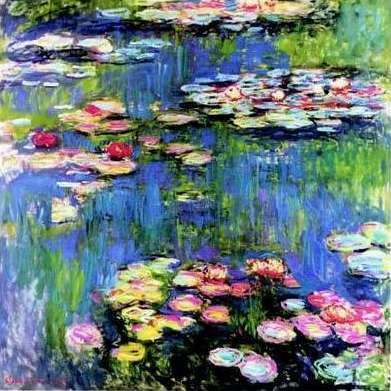 I was thinking about what was said in class on Wednesday about art and longing and decided to read more about what C.S. Lewis meant when talking about "Sehnsucht." From my understanding C.S. Lewis linked longing strangely enough to joy. I initially found this to be odd because Buddhists describe desire as the cause of all suffering, and strive to rid themselves of all desire. This makes sense in terms of tangible things, because objects are fleeting and cannot possibly make one truly happy eternally. But C.S. Lewis described a different kind of desire, a longing to come back to something transcendent that we can never really reach. He claimed that joy came through "blissful glimpses God sends to an estranged race to awaken sweet desire of pagans and thereby calling them to Himself."
 C.S. Lewis also defined "joy" as the highest, purest sense of imagination, or a sense of awe at the realization of Absolute Truth. It is through art that humans try to convey this Absolute Truth, to awaken desire, to try with all our might to re-connect ourselves with that "Holy Other." As I reflect on Lewis' thoughts on these matters I recall emotions I have experienced when encountering beauty. Emotions that are so hard to put into words, poets and musicians and painters all try to communicate it and never really say it all. It is a constant longing that hurts in such a way that we feel joyous, to be coming into contact with anything at all. We feel a strange sense of ecstasy in knowing that we aren't quite there but we've got a blissful glimpse of it. I feel this way when moved by a particular piece of music, or witnessing a brilliant sunset, or coming across a poem that jars me into feeling something. And always afterwards there is the desire to have contact again. It is the reason I play a song over and over again, or read a poem again and again, or fumble for my camera to try and capture the radiant rays of the sun, still knowing that the picture won't suffice the next time around. The second listen of the song won't have quite as sweet of an effect on me as the first time I realized it had gripped me. The poem won't jar me as it did the first time. But I still feel joy in the quest to re-connect, to give the song another listen or to continue searching for more things to take me by surprise.
btw- I chose to put up an image of Claude Monet's "Water Lilies" simply because he was the first painter I was captivated by as a small child. I loved his lush scenes of bridges with flowers dripping from them and placid lily pads on a lake.
Saturday, September 5, 2009
Sarah Short - Perception of What is "Real"
Ever since our second class, I've been thinking a lot about the discussion we had regarding if there is one single reality for all of humanity or if everyone has their own valid reality. Or, beyond that, if most people's reality is valid, but not those who are deemed to be insane.
In my opinion, we're all crazy or unbalanced in our own unique way. But most of us pick a particular delusion to name "real" and those who disagree with us are labeled "crazy." If you think about, we use the word "crazy" all the time in our everyday lives to refer to someone's different perception of the same event. For instance, a couple breaks up. The girlfriend tells her friends her version of how the breakup occurred, which she believes to be accurate. The boyfriend tells his friends his altered version of the breakup, which he also believes to be accurate. But neither of them was able to step into the other person's being while the event occurred, and so they only obtained one understanding, one perception of the event. Thus, when each hears through the grapevine what the other has said about what happened, which differs from their own idea and memory, they will each automatically say, "They're crazy!"
But is it really accurate to call anyone crazy, even those with diagnosed, mental psychoses? Obviously, their perception of reality is different from ours, but does that make it inherently wrong? I would liken the perception of reality to the perception of art. The same painting hanging in a museum can be viewed by hundreds of thousands of people, and each individual is going to perceive a different image, intention, and meaning. To go further, no one seeing the painting will ever have the same perception of it as the creator of the piece. Is life not the same way? I see life differently, I find a different meaning in life, and I think differently about why life exists that the person next to me does, and the person next to him, and so on. Does that make me crazy? If I look at that painting and see love, and someone else sees hate, does that make one of us crazy? I think not. Each of us is basing our interpretation, our perception, off of past experiences and past knowledge. Past imitation even.
The question "what is art?" is then akin to the question of "what is reality?" No two people will have the same answer, but everyone's answer should be respected, and treated as an individual perception. Because for all we know, those whose perceptions are labeled as "crazy" or as "folly" may just be right in the end, if there can be a "right."
In my opinion, we're all crazy or unbalanced in our own unique way. But most of us pick a particular delusion to name "real" and those who disagree with us are labeled "crazy." If you think about, we use the word "crazy" all the time in our everyday lives to refer to someone's different perception of the same event. For instance, a couple breaks up. The girlfriend tells her friends her version of how the breakup occurred, which she believes to be accurate. The boyfriend tells his friends his altered version of the breakup, which he also believes to be accurate. But neither of them was able to step into the other person's being while the event occurred, and so they only obtained one understanding, one perception of the event. Thus, when each hears through the grapevine what the other has said about what happened, which differs from their own idea and memory, they will each automatically say, "They're crazy!"
But is it really accurate to call anyone crazy, even those with diagnosed, mental psychoses? Obviously, their perception of reality is different from ours, but does that make it inherently wrong? I would liken the perception of reality to the perception of art. The same painting hanging in a museum can be viewed by hundreds of thousands of people, and each individual is going to perceive a different image, intention, and meaning. To go further, no one seeing the painting will ever have the same perception of it as the creator of the piece. Is life not the same way? I see life differently, I find a different meaning in life, and I think differently about why life exists that the person next to me does, and the person next to him, and so on. Does that make me crazy? If I look at that painting and see love, and someone else sees hate, does that make one of us crazy? I think not. Each of us is basing our interpretation, our perception, off of past experiences and past knowledge. Past imitation even.
The question "what is art?" is then akin to the question of "what is reality?" No two people will have the same answer, but everyone's answer should be respected, and treated as an individual perception. Because for all we know, those whose perceptions are labeled as "crazy" or as "folly" may just be right in the end, if there can be a "right."
Kristine Penningroth-- Art: Impact and Harmony
After the class discussion on Wednesday I thought about the different things that we went over about how art can impact you and at what moment it grips you and draws you in and for what reasons. I always remeber hearing the phrase " Art is in the eye of the beholder", but I never really gave much thought to it. After talking more about this particular thought or opinion in class I have a different out look.
Art is a way of expressing an emotion, a feeling, whether is be happy, sad, mad, or any other emotion that a person is feeling. Art has a way of drawing people together or even just bringing one person to a different place mentally or spiritually. Art can mean so many different things to so many different people. It is about interpretation or in some cases just looking at a picture and just seeing beauty. When a person draws or writes or paints it is a way for him or her to release something that has been pent up inside them and this is the only way they are able to express themselves to the world and make themselves feel better. It creates a peace, or harmony in them. An Artist does this not only for himself, but also for those that will possibly look at his artwork and possibly be able to relate to what it is being expressed. The harmony that comes from a certain painting is left alone to the person to feel or not to feel. When the artwork is being produced there is a good possiblity that the artist was at peace when, or felt peace after the picture was finished. Other people when they go into a museum and look at the paintings feel the impact and harmonious feeling then. I have many times felt the artists message when looking at different pieces. It's an individual feeling that cannot be replicated.
Besides the harmony that can come with art, there is also an impact that can arise. Every person is different, but there are different pieces of artwork that do it for different people. The most important thing is what you feel after you have found your piece of art and how your life could change, or how your belief can change based on what you saw. There is some art that just makes you want to cry or some that is just so pretty to forget. It will be something that can come up in conversation so that you will want to share it and how you felt and what you wanted to take away from that experience once you had it. Another way of looking at the impact is taking the perspective of a small child. When I went to the Met the first time there was a painting of a lot of red, yellow, and orange stripes and specs. As a kid you really just look at it as pretty and colorful, but when I went back to the Met after I had grown up and learned more about history I found the painting again and it had a completely different meaning for me. It showed a conflict and how important and how strong it was. The colors were no longer just colors but figures expressing a time in history and feelings based on that time.
Art is so much more than just a pretty picture on the wall. The saying "A picture's worth a thousand words" is really true. The picture can bring so much more to light than a person trying to convey the meaning in words. It is an original way to express emotions that cannot be expressed in another way.
Art is a way of expressing an emotion, a feeling, whether is be happy, sad, mad, or any other emotion that a person is feeling. Art has a way of drawing people together or even just bringing one person to a different place mentally or spiritually. Art can mean so many different things to so many different people. It is about interpretation or in some cases just looking at a picture and just seeing beauty. When a person draws or writes or paints it is a way for him or her to release something that has been pent up inside them and this is the only way they are able to express themselves to the world and make themselves feel better. It creates a peace, or harmony in them. An Artist does this not only for himself, but also for those that will possibly look at his artwork and possibly be able to relate to what it is being expressed. The harmony that comes from a certain painting is left alone to the person to feel or not to feel. When the artwork is being produced there is a good possiblity that the artist was at peace when, or felt peace after the picture was finished. Other people when they go into a museum and look at the paintings feel the impact and harmonious feeling then. I have many times felt the artists message when looking at different pieces. It's an individual feeling that cannot be replicated.
Besides the harmony that can come with art, there is also an impact that can arise. Every person is different, but there are different pieces of artwork that do it for different people. The most important thing is what you feel after you have found your piece of art and how your life could change, or how your belief can change based on what you saw. There is some art that just makes you want to cry or some that is just so pretty to forget. It will be something that can come up in conversation so that you will want to share it and how you felt and what you wanted to take away from that experience once you had it. Another way of looking at the impact is taking the perspective of a small child. When I went to the Met the first time there was a painting of a lot of red, yellow, and orange stripes and specs. As a kid you really just look at it as pretty and colorful, but when I went back to the Met after I had grown up and learned more about history I found the painting again and it had a completely different meaning for me. It showed a conflict and how important and how strong it was. The colors were no longer just colors but figures expressing a time in history and feelings based on that time.
Art is so much more than just a pretty picture on the wall. The saying "A picture's worth a thousand words" is really true. The picture can bring so much more to light than a person trying to convey the meaning in words. It is an original way to express emotions that cannot be expressed in another way.
Wednesday, September 2, 2009
Valerie Fliss - Aristotle's Poetics and Comedy

I like laughing - there it is. You know those commericals for that website ComedyFetish.com? Yeah, well, if ever I had a fetish, it would have to be for comedy.
So, you can imagine that I was more than a little excited to read what Aristotle had to say about comedy, but after I read it, I'm not entirely sure if I liked it. For Aristotle, while Tragedy aims to represent men as 'better than in actual life', Comedy is meant to represent them 'as worse'! My thinking was always that Tragedy represented people as worse than they really are, while Comedy merely commented on how things were! Not, as Mr. Aristotle says, "consists of some defect or ugliness." How come Comedy is supposed to be a negative thing? And since when did Tragedy become all lofty!?
But, then I started to think about it in terms of 'imitation', and how imitation plays a role in Aristotle's view of art. Comedy is an imitation of the world, but an 'ugly' distortion - it takes the world, its people and ideas, and makes it base, lewd, and ludicrous so that we can laugh at it. It is this distortion that makes things seem so darn funny, and how the art of comedy comes about. It makes us look at the world in a different way, and realize, learn something about the world we live in. Overall, I think Comedy is supposed to show us (humanity, that is) not to take ourselves too seriously. Someone once told me (or I read it somewhere, which is just about the same thing as being told) that if humans couldn't laugh, we would have killed ourselves years ago because life would just have been too much for us to take. And while I may still have mixed feelings about Tragedy, in looking at the purpose of Comedy, making men look worse than they are so that we can laugh, the purpose of Tragedy making men look better than they are so that we can cry, seems to make much more sense. The participation in these dramas, in these imitations becomes an almost epiphany, an experience in that ultimate experience of what it is to be a human.
I have no particular reason for including that banana comic, except that I thought it was funny.
Subscribe to:
Comments (Atom)


